
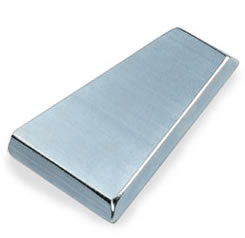
Permanent magnets are often categorized by shape. Bar magnets, for instance, feature a rectangular bar-like shape, whereas cube magnets feature a cube-like shape. A lesser-known shape in which permanent magnets are made, however, is wedge. Wedge magnets still produce a powerful magnetic field, but they feature a unique shape that distinguishes them from other types of magnets.
Overview of Wedge Magnets
Wedge magnets are permanent magnets, typically neodymium, that feature a wedge-like shape. They aren’t square, nor are they rectangular. Rather, wedge magnets are shaped like a wedge.
Most wedge magnets are made of neodymium, iron and boron. Also known as neodymium magnets, they are known for their exceptional strength. The magnetic field of neodymium magnets is up to 10 times stronger than that of traditional ceramic magnets. This high strength-to-size ratio makes neodymium magnets ideal for commercial and industrial applications.
The Science Behind Their Wedge-Like Shape
The shape of a magnet will affect its magnetic field. Flat magnets produce a uniform magnetic field. Wedge magnets, on the other hand, create greater variability. They have a tapered profile that allows for a stronger magnetic force on the thicker end and a weaker magnetic force on the thinner end.
The uneven distribution of a wedge magnet’s magnetic field makes them highly versatile. Engineers can use them to concentrate the magnetic field on specific points of contact. Wedge magnets are also commonly used in rotating systems, as they offer improved alignment in curved paths. Many electric motors even use wedge magnets.
Benefits of Wedge Magnets
When compared to traditional ceramic magnets, wedge magnets offer several benefits, one of which is better flux control. Engineers and other operators use them to concentrate magnetic forces.
Wedge magnets also offer a better fit in certain spaces. Curved surfaces and paths, for example, may not support a flat magnet. For spaces such as these, you should consider using an appropriately sized wedge magnet for a flush fit.
Assuming they are neodymium, wedge magnets are very strong. They regularly boast up to 13200 Gauss. Ceramic magnets, in comparison, typically have a Gauss rating of 400 to over 3,500.
Not only are they strong, but wedge magnets are also durable. They are typically coated with a protective finish, such as nickel. They are still made of neodymium, iron and boron, but they feature a protective outer layer of nickel. This nickel outer layer shields and protects the underlying materials from corrosion and environmental pollutants.