
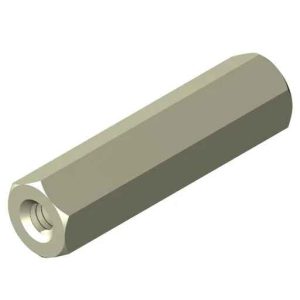
Standoffs are more than just threaded fasteners. While they feature threads to connect threaded objects, they act as spacers as well. From printed circuit boards (PCBs) and motherboards to signs and panels, many products use them to separate their individual components. When choosing a standoff, however, there are several things you should consider.
#1) Material
You should consider the material when choosing a standoff. Common materials in which standoffs are made include aluminum, brass, stainless steel and nylon. Aluminum steel standoffs are lightweight and corrosion-resistant. Brass standoffs feature a unique rustic tone that many people prefer. Stainless steel standoffs offer a superior level of strength and durability. Nylon standoffs offer excellent electrical insulation.
#2) Shape
While they are all long and narrow, standoffs are available in different shapes. Some of them are hexagonal, whereas others are round. Hexagonal standoffs are the most common. They have six flattened sides, allowing for easy installation using a wrench or socket. Round standoffs are typically used in applications where aesthetics is a priority, such as consumer electronics.
#3) Length
One of the most important things to consider when choosing a standoff is the length. After all, they are used to separate individual components. The components on a PCB, for instance, may be mounted with standoffs. By creating space between the components and the PCB itself, heat-related damage is less likely to occur. Standoffs can range from 5 millimeters to 30 millimeters or even longer, so choose a length that’s appropriate for your project.
#4) Diameter
The diameter is also something to consider when choosing a standoff. A wide diameter indicates a thick standoff, whereas a narrow diameter indicates a thinner standoff that takes up less space. You should pay close attention to the outside diameter, which is the distance from the outer edge of a standoff to the outer edge on the opposite side.
#5) Male-Female vs Female-Female
Standoffs are available in different styles, such as male-female and female-female. Male-female standoffs are characterized by internal threads on one end and external threads on the other end. Female-female standoffs, on the other hand, feature internal threads on both ends.
In Conclusion
Choosing the right standoff comes down to more than picking a simple fastener. Material, shape, length, diameter and style all play a role in how well it performs in a given application. A standoff that works for a motherboard may not be suitable for a structural panel, and one designed for strength may not provide the insulation required in electronics.