
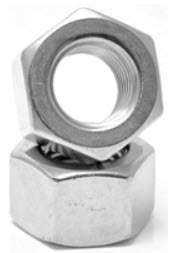
When choosing nuts, you should consider the application for which they will be used. Some applications will expose nuts to greater stress. As a result, using low-quality or weak nuts may compromise the fastened parts. Fortunately, structural nuts are available to handle high-stress applications such as this.
The Basics of Structural Nuts
Structural nuts are strong, heavy-duty nuts. Also known as heavy hex nuts, they are designed for high-stress applications. Structural nuts can handle extreme stress, including tension loads and shear loads, while maintaining the integrity of the fastened parts.
Structural nuts are commonly used for the following:
- Fastening steel beams in buildings and properties
- Fastening anchor bolts to foundations
- Fastening bridge components
- Fastening railway systems
Structural Nuts vs Traditional Nuts
They may look, but structural nuts aren’t the same as traditional nuts. Traditional nuts can range in strength and overall quality, with some being stronger and higher quality than others. Structural nuts, on the other hand, must meet strict manufacturing standards, such as ASTM A563. Therefore, they are all very strong and high quality.
While they are both hex-shaped, structural nuts are typically bigger than traditional nuts. They are both thicker and wider than their traditional counterparts. This larger size translates into a stronger nut that can withstand more stress.
Structural nuts cost more than traditional nuts. Their large size, as well as their stringent design and manufacturing process, translates into a higher cost.
Another difference between structural nuts and traditional nuts is their installation method. Traditional nuts are often twisted onto the end of a bolt — either manually or with a standard wrench or socket. Structural nuts, in comparison, are typically installed using a calibrated torque wrench or similar high-precision tool. With these tools, workers can install structural nuts with a specific amount of torque to prevent over-tightening and under-tightening.
Grade C vs Grade DH Structural Nuts
There are different Grades of structural nuts. ASTM A563 nuts, for instance, are available in Grade C and Grade GH.
Grad DH structural nuts offer the highest level of strength and hardness. They are typically used in conjunction with A490 bolts. Grade C structural nuts are made of tempered carbon steel and designed for use with A325 bolts.
In Conclusion
The choice of nut should reflect the demands of the job. High-stress connections leave little room for error Structural nuts exist to meet that challenge. Their strength, size and controlled installation help ensure that critical joints perform as intended over time.