
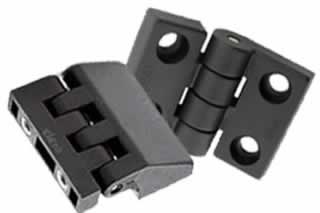
If you’re planning to use plastic hinges, you’ll need to choose the right lubricant. Hinges consist of two leafs that, when interlocked, form a central knuckle. The knuckle is the pivot point, allowing one leaf to swing away from the other leaf. Regular lubrication ensures that the hinge’s leafs can move smoothly while also minimizing the risk of squeaking and corrosion.
Beware: The Wrong Lubricant Can Damage Plastic Hinges
You can’t use just any lubricant on plastic hinges. While there are many general-purpose lubricants, some of them can damage objects made of plastic, including hinges.
Lubricants contain chemicals, such as petroleum distillates. Plastic reacts differently to these chemicals than metal. When exposed to petroleum-based chemicals, plastic can swell, crack or become brittle — and it doesn’t take long for damage such as this to occur. Research shows that petroleum-based chemicals can damage plastic in as little as 48 to 72 hours.
Here’s a brief list of lubricants to avoid using on plastic hinges:
- Penetrating oils
- Petroleum-based lubricants
- Automotive grease
- Machine grease
- Solvent-based aerosols
Silicone-Based Lubricant
Silicone-based lubricant is safe to use on plastic hinges. Available in aerosol spray cans, it creates a thin and slippery film that reduces friction. Silicone-based lubricant is also resistant to heat and moisture, making it a popular choice for harsh environments. So if you’re looking for an effective and safe lubricant for plastic hinges, you can’t go wrong with silicone formulas.
PTFE-Based Lubricant
Polytetrafluoroethylene (PTFE)-based lubricant is safe to use on plastic hinges. It’s a type of synthetic lubricant made of the carbon and fluorine compound from which it’s named. When applied, PTFE-based lubricant will deposit a thin layer of PTFE and a carrier substance on the surface of the hinge. The carrier substance will dry soon after, leaving behind a dry lubricant in the form of PTFE molecules.
PFPE-Based Lubricant
Another option for plastic hinges is perfluoropolyether (PFPE)-based lubricant. It works in a similar way as PTFE-based lubricant. Rather than featuring PTFE molecules, though, it features PFPE molecules. PFPE is a safe and effective lubricating chemical for plastic.
In Conclusion
From storage containers and consumer appliances to electronics and access panels, plastic hinges are used in a wide range of products. Regular lubrication reduces friction so that the hinges are easier to use and better protected against unwanted noise and corrosion. Just remember to choose a plastic-safe lubricant.