
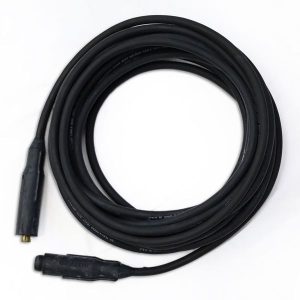
A short welding cable can prove highly restrictive. You’ll have to keep the electrode close to the welding machine at all times. If the cable is too short, you may not be able to reach certain areas of the workpiece. Rather than replacing the welding machine, however, you can attach a welding extension cable.
Welding extension cables are rugged power cords. They are designed to transfer power from a welding machine, such as a stick welding machine, to an electrode and workpiece. While they all serve this same purpose, welding extension cables are available in different types. Here’s how to choose the right cable for your next welding project.
Get the Right Length
Welding extension cables are available in different lengths. Some of them are just 25 feet long, whereas others are 50 or even 100 feet long.
Long cables provide more mobility and versatility than their shorter counterparts. With that said, the length of a welding extension cable will affect its cost and weight. Long cables are typically heavier and cost more than shorter cables, so choose an appropriate length that will allow you to fully reach the desired workpiece without being excessively long.
Match Gauge to Amperage
One of the most important things to consider when choosing a welding extension cable is the gauge. The gauge, of course, represents the diameter or thickness of a cable. The higher the gauge, the thinner the cable.
The gauge of a welding extension cable needs to match the amperage for which it’s used. Stick welding machines often run at 90 to 300 amps. As amperage increases, the diameter of the cable must increase as well. Otherwise, the cable may overheat.
Check the Connector Type
You should check the connector type when choosing a welding extension cable. All welding extension cables have connectors. They are used to attach the cables to welding machines and hardware. The type of connector a welding extension cable uses, though, may vary.
Common types of connectors for welding extension cables include Lenco, Tweco, Dinse and Camlock. High-quality connectors such as these are designed to protect against accidental or unwanted disconnections.
In Conclusion
Choosing the right welding extension cable comes down to balancing reach, gauge and the connector type. A properly sized cable gives you the freedom to move without sacrificing performance or safety. The gauge must support the machine’s amperage to prevent heat buildup and power loss. Connector style also matters because secure connections reduce downtime and improve overall control.