
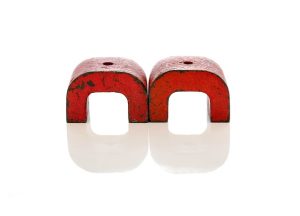
When shopping for magnets, you may discover that some of them have a coating. Magnets, of course, are characterized by their ability to attract ferromagnetic materials. When placed near an object containing a ferromagnetic material — iron, cobalt or nickel — they will pull the object towards them. While some magnets have a bare and exposed surface, others have a coating. Here’s everything you need to know about magnet coatings.
What Are Magnet Coatings?
Magnet coatings are outer layers that shield and protect magnets from damage. Many magnets, particularly rare earth magnets like neodymium magnets, have a coating. It’s essentially a thin protective shell that encapsulates the magnet.
Why Magnets Have Coatings
Magnets have coatings to prolong their life and protect them from damage. Even if a magnet is hard, it may be brittle. Neodymium magnets, for instance, are hard but very brittle. Therefore, when dropped or otherwise exposed to physical stress, they may break. Coatings minimize the risk of breakage by shielding the underlying neodymium — and other alloys — from damage.
Coatings also protect magnets from corrosion. Corrosion is the result of oxidation. When exposed to oxygen, metals will lose electrons while subsequently forming metal oxides like iron oxide. Coatings protect magnets from corrosion by ensuring that oxygen can’t reach the underlying metals. As long as the coating remains intact, magnets typically won’t corrode.
Common Types of Magnet Coatings
While they all consist of a protective outer layer, magnet coatings are available in different materials. Nickel is one of the most popular types of magnet coatings. It offers a smooth, metallic finish with excellent adhesion. Nickel is technically a metal, but it’s considered a very corrosion-resistant metal, making it ideal for magnet coatings.
Plastic is often used as a magnet coating. It’s inexpensive, easy to apply and long-lasting. Furthermore, plastic allows for complete color control. With the right dyes, you can achieve any color with a plastic coating.
There are also rubber magnet coatings. They are typically softer than plastic coatings but offer a similar level of protection.
Some magnets are coated with zinc. Zinc coatings have a matte gray or light blue color that many people prefer. When compared to nickel, though, zinc is less effective at protecting against corrosion. So, if you’re planning to use the magnet in a humid environment, you may want to go with a nickel or plastic coating. You can find other types of magnet coatings, but nickel, plastic, rubber and zinc are among the most common.