
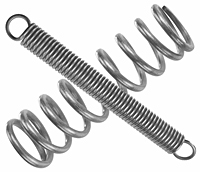
Springs are used in a wide variety of applications. In sofas and recliners, they are used to distribute weight and extend the furniture’s lifespan. In washing machines and clothes dryers, springs absorb shock to dampen vibrations and protect against damage. Even automobiles use springs in their suspension systems. While all springs are designed to store mechanical energy, however, some of them are preloaded.
What Is Preload?
Spring preload is the initial load applied to a spring before it’s subjected to an external load. It’s typically measured in pounds per inch. A spring with a preload of 20 pounds per inch, for instance, has an initial load of 20 pounds per inch.
Traditional springs don’t have an initial load applied to them. They consist of metal wire that, when exposed to an external load, become shorter or longer. Compression springs become shorter when exposed to an external load, whereas extension springs become longer. Regardless, only preloaded springs have an initial load.
How Preload Works
Preload works by exposing the spring to a load before it’s subjected to a separate, external load. The spring is literally “preloaded.”
Preloaded compression springs are intentionally compressed by a specific amount of pressure before use. This preloading process causes them to compress and become shorter. When exposed to an external load, they become even shorter.
Preloaded extension springs are intentionally stretched by a specific amount of pressure before use. This preloading process causes them to become longer.
Why Springs Are Preloaded
You might be wondering why some springs are preloaded. The main purpose of preloading is to minimize and control and the spring’s movement at rest. Without an initial load, springs may feel loose with excess play. Depending on the application for which the spring is used, this can result in unwanted movement. Preloading removes slack so that springs are more stable.
In machines, preloading helps to maintain contact between parts. Parts are often connected with springs. If a spring is loose, a part may pull away or separate. Preloaded springs prevent this from happening by applying an initial load to maintain contact.
In Conclusion
The bottom line is that preloading a spring improves its stability and performance by removing excess slack. This ensures smoother operation, reduces unwanted movement, and helps connected parts stay in place. Whether in furniture, appliances, or vehicles, preloaded springs offer a high level of control and precision.