
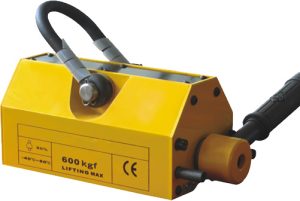
Lifting magnets are commonly used to lift and move heavy objects. Also known as magnetic lifters, they feature two high-powered magnets, such as neodymium magnets. When activated, the magnets’ poles become aligned, thereby creating a powerful magnetic field that can lift ferromagnetic materials. When shopping for a lifting magnet, however, you should consider its holding value.
Holding Value Explained
The holding value of a lifting magnet represents the maximum weight it can safely lift and hold under ideal conditions. The higher the holding value, the more weight a lifting magnet can lift and hold. It’s typically measured in pounds or, in some cases, kilograms. A lifting magnet with a holding value of 600 pounds can lift and hold objects weighing up to 600 pounds, whereas a lifting magnet with a holding value of 5,000 pounds can lift and hold objects weighing up to 5,000 pounds.
Factors That Affect a Lifting Magnet’s Holding Value
Several factors can affect a lifting magnet’s holding value, one of which is the magnet size. Large lifting magnets typically have a higher holding value than smaller lifting magnets. This is because large lifting magnets have bigger magnets, which allows them to produce stronger magnetic fields.
The shape of the objects with which they are used can affect a magnet’s holding value. Some objects are flat, whereas others are round or curved. Lifting magnets can typically handle more weight when lifting and holding flat objects than round or curved objects. As a result, they have a higher holding value when used with flat objects.
It’s important to note that holding value ratings assume that the lifting magnet is used with clean objects. Dirt and debris can interfere with a lifting magnet’s ability to lift and hold objects. If there’s a thick layer of dirt and debris on the object, the lifting magnet may struggle to lift and hold it — even if the weight of the object is below the magnet’s holding value.
Why Holding Value Matters
You should never use a lifting magnet with objects heavier than its holding value. If an object exceeds this value, serious bodily injury may occur. The load may become detached from the lifting magnet, at which point it may fall and injure the operator or bystanders. Operators can minimize the risk of injury by ensuring the lifting magnet has an appropriate holding value that’s lower than the weight of the object.
Ensuring the lifting magnet has an appropriate holding value can also protect equipment from damage. If the weight of an object exceeds the magnet’s holding value, the magnet’s internal components may become strained. Over time, this can reduce its magnetic strength or even permanently demagnetize or damage it.