
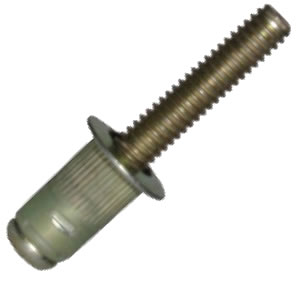
If you need to attach a mechanical component to a threaded rod, look no further than a pull-up stud. Also known as rivet studs, they offer exterior threads. You can install them in a variety of materials, including thin materials. Once installed, they will provide a point of attachment for a mechanical component with internal threads. Here’s everything you need to know about pull-up studs and how they work.
The Basics of Pull-Up Studs
Pull-up studs are threaded mechanical fasteners that create secure external threads. As shown in the photo above, they feature a threaded rod with a wide and short shank at the base. The threaded rod section functions as external threads. You can twist objects with internal threads onto this section.
Benefits of pull-up studs include:
- Only requires access to the front of the workpiece during installation
- Works in thin materials, such as sheet metal and aluminum panels
- Unlike welded studs, they don’t produce heat
- Available in a wide range of sizes
- Offers anti-rotation capabilities
- Highly resistant to external forces like vibrations
- Quick and easy to install (see below)
How Pull-Up Studs Work
Pull-up studs combine features of rivets with threaded studs. Like rivets, they require a pre-drilled hole. You’ll need to drill a hole in the material where you want to install the pull-up stud. Next, you’ll need to attach the threaded section of the pull-up stud to a special tool known as a stud setter.
With the pull-up stud attached, you can now position the shank into the hole. Squeezing the stud setter’s handle will then collapse the shank, causing it to expand around the back of the hole. Finally, you can unscrew the pull-up stud from the stud setter, at which point you’ll have a threaded rod left in the hole.
Pull-Up Studs vs Rivet Nuts
There are also rivet nuts. While they both require a special tool to install, they are used for different purposes. Pull-up studs are used to create secure external threads, whereas rivet nuts are used to create secure internal threads.
Rivet nuts consist of a ring with interior threads. They offer many of the same benefits as pull-up studs, including blind installation and support for thin materials. The difference is that rivet nuts function like a nut by offering interior threads. Pull-up studs, on the other hand, function as threaded studs by offering exterior threads.