
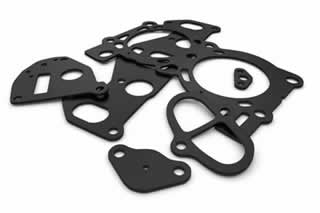
Water jet cut gaskets are commonly used in sealing applications that require tight tolerances. They are mechanical seals that, when placed between the mating surface of two or more parts, prevent leaks. Water jet cut gaskets, however, are characterized by a unique water-based manufacturing process that distinguishes them from other types of gaskets.
What Are Water Jet Cut Gaskets?
Water jet cut gaskets are mechanical seals made using a narrow, high-pressure stream of water. You can find them in different shapes and sizes. Water jet cut gaskets are also available in different materials. Regardless, they are all made using pressurized water, which cuts through raw gasket materials to achieve the desired dimensions.
You can find water jet cut gaskets in a variety of materials, such as the following:
- Nitrile
- PTFE
- Silicone
- Graphite
- Rubber
- Cork
- Cellulose sheet
How Water Jet Cut Gaskets Are Made
Gaskets are often categorized according to the way in which they are manufactured. Die cut gaskets are manufactured using a specialized cutting tool, known as a die, to cut materials into custom shapes. Water jet cut gaskets are made using a water jet cutter.
The manufacturing process for water jet cut gaskets typically begins with design. Engineers or designers will create a layout of the gasket using CAD software. Once complete, the design is loaded into the water jet cutter.
The next step is preparing the water jet cutter. The material must be added to the machine, and the design file must be converted into a cutting path. The operator will then enter specifications, such as water pressure and cutting speed.
After preparing the water jet cutter, the operator will execute the design. The water jet cutter will move a nozzle over the material while following the programmed cutting path. During this process, it will blast the material with a narrow, high-pressure stream of water, resulting in very precise cuts known as “kerfs.”
Benefits of Water Jet Cut Gaskets
Water jet cut gaskets offer several benefits, one of which is protection from heat damage. Other types of cutting processes create heat. Heat, of course, can cause warping, chemical changes or general damage. Water jet gaskets are made using water, so there’s no risk of heat-related damage.
It may use water, but water jet cutting is very powerful. It typically involves pressures ranging from 40,000 to 90,000 PSI. With such high pressures, water jet cutters can create clean and precise cuts.
Another benefit of water jet cut gaskets is improved safety. Water jet cutting is generally considered safer than many other cutting processes. This is because it doesn’t produce fumes or dust. Water jet cutting also eliminates the need for coolants since there’s no heat involved.