
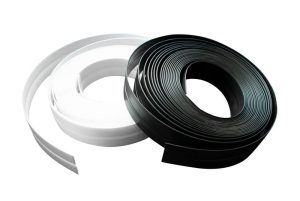
Ever wonder how living hinges are manufactured? Traditional hinges are made by machining and shaping metal. They typically feature two rectangular-shaped metal leafs, which are held together by a single rod-shaped metal pin.
Living hinges aren’t made of metal. Also known as continuous hinges, they are characterized by a flexible construction. For a better understanding of living hinges and how they are made, keep reading.
Material Selection
Manufacturers must choose the right material for living hinges. As previously mentioned, living hinges are distinguished from traditional metal hinges by their flexible construction. They are often mounted on rigid objects, such as bottles and containers, where they provide a convenient and effective opening mechanism.
Most living hinges are made of an alloyed polymer, with polypropylene being one of the most common materials. A type of propylene-based plastic, polypropylene is strong, flexible and resistant to both chemicals and fatigue. When made of polypropylene, living hinges can bend repeatedly without succumbing to damage or permanent deformation.
Injection Molding
Most living hinges are made via injection molding. Raw material, such as polypropylene, is heated until it achieves a molten, liquid state. The molten material is then injected into a mold cavity.
Injection molding leverages pressure to ensure the finished product takes the shape of the mold. Pressure forces the molten material into every crevice of the mold. After the material has cooled and solidified, the mold is opened to reveal the newly created product: a single, seamless piece of plastic with a thin flexible region.
Mold Design
The design of the mold is an important step in the manufacturing of living hinges. Living hinges are very thin — typically just a fraction of an inch thin. The size of the mold, of course, will determine the size of the living hinge. If it’s too big, the living hinge may be too thick or long. If the mold is too small, on the other hand, the living hinge may be too small.
Manufacturers methodically design molds with precise dimensions. The mold must be the perfect size and have the perfect balance to ensure the molten material flows evenly.
Prototyping
Prototyping plays a key role in the manufacturing of living hinges. Before mass-producing them, manufacturers will often create prototypes. These prototypes allow manufacturers to verify the living hinge’s size, fatigue resistance, bend radius and other specifications. If there’s a problem with the living hinge, manufacturers can make the necessary corrections before mass-producing it.