
Are you dealing with a sagging door? Whether interior or exterior, a properly installed door should be parallel to the floor. Over time, however, doors can begin to sag. Rather than being parallel to the floor, they’ll tilt down at a slight angle of about 2 to 5 degrees. Fortunately, there are several things you can do to adjust a sagging door.
Tighten the Screws
Sometimes the simplest answer is the right one. Start by tightening all screws holding the door to the adjacent jamb. Most standard-size doors have two or three hinges, with each hinge supporting three to four screws. If any of these screws become loose, the door may sag. Use a screwdriver with the appropriate drive type — typically a Phillips head — to fully tighten all screws.
Replace With Longer Screws
Tightening the screws won’t always work. If a hole has stripped threads, the screw will simply spin as you turn the screwdriver rather than tightening. Water damage, for instance, can cause some of the wood behind the jamb to decay. Depending on the extent of the damage, you may be able to replace the existing screws with longer screws. Screws with a length of at least 3 inches will oftentimes extend past the damaged wood to “healthy” wood that they can grip.
Install Shims
Shims can help fix a sagging door. Shims are small, flat spacers that are used to correct misaligned hinges. They can be placed between the jamb and the hinge or between the door and hinge. Installing a shim involves loosening the hinge and sliding the shim in place. Shims installed on the bottom hinge can push the lower part of the door outward, thereby correcting the sagging door.
Change the Hinges
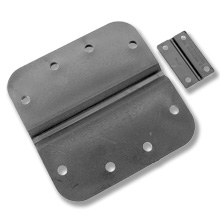
Using the wrong hinges can lead to a sagging door. If the hinges are too small, or if they are made of cheap materials, they may not be able to support the door’s weight. Over time, this can cause the door to sag. If you believe small or low-quality hinges are causing your door to sag, try replacing them with stronger and more durable hinges.
In Conclusion
A sagging door can be frustrating, but the good news is that it’s typically an easy fix. In most cases, the fix comes down to restoring proper support and alignment. Tightening loose screws, upgrading to longer fasteners, adding shims or replacing weak hinges all address the same root issue. The door simply needs a stable connection to the frame.