
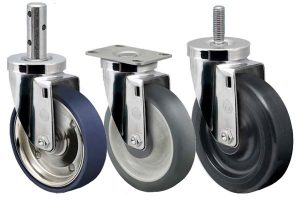
Bearings play an important role in casters. Regardless of material, all casters consist of a wheel and a housing unit. The housing unit is mounted to the bottom of an object, such as a chair or cart, to provide mobility. To reduce friction and facilitate smooth rolling, bearings are used.
Caster bearings come in a variety of sizes. When used on light-duty casters, they often measure under 10mm. Bearings on medium- and heavy-duty casters, on the other hand, range from 20mm to well over 50mm. While there are different types of caster bearings, however, ball bearings are among the most popular.
What Are Ball Bearings?
Ball bearings are rolling components for casters that feature an array of small balls. Like all types of bearings, they are used to reduce friction. Casters produce friction where the wheels connect to the housing unit. Bearings, including ball bearings, allow the wheels to rotate with less friction.
In addition to ball bearings, other common types of bearings for casters include the following:
- Plain bearings
- Roller bearings
- Sintered iron bearings
- Taper bearings
How Ball Bearings Differ From Other Types of Caster Bearings
While they are all used to reduce friction, ball bearings have an entirely different design than other types of caster bearings. They are characterized by the presence of small balls. Ball bearings feature hardened steel or ceramic balls. These balls are typically contained between two rings, known as an inner and outer ring.
When you push or pull a caster with a ball bearing, the balls will roll. This rolling action reduces friction, which in turn makes the caster easy to move while also protecting it from premature wear and tear. Other types of casters lack balls and, instead, rely on a different mechanism to reduce friction.
Benefits of Ball Bearings for Casters
Being that there are other types of caster bearings available, you might be wondering what benefits ball bearings offer. They typically provide a smoother rolling action than many other types of bearings. When compared to plain bearings, for example, ball bearings may provide up to 50% smoother rolling.
Ball bearings can also handle both radial and axial loads. Axial loads involve casters rotating along the axle of the housing unit. Radial loads, on the other hand, involve forces applied perpendicular to the axis. While other types of bearings may only handle axial loads, ball bearings can handle both axial and radial loads.
Another reason ball bearings are so popular is because they can handle heavy loads. All bearings have a weight limit, but ball bearings can handle heavier loads than other bearing types. Many medium- and heavy-duty casters use ball bearings for this reason.