
It’s a common misconception that all hinges are metal. While most of them are, in fact, made of steel, aluminum, titanium, brass or similar metals or alloys, living hinges are made of flexible materials.
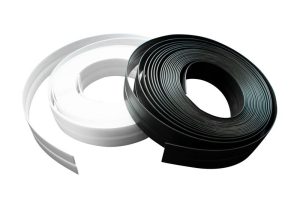
Living hinges are characterized by a flexible construction. Like all hinges, they are used to connect two objects while allowing for a limited angle of rotation. Living hinges, however, don’t feature a knuckle and pin. Instead, they typically consist of a single thin piece of flexible material.
Alloyed Polymers
Many living hinges are made of alloyed polymers. Also known as plastic alloys, alloyed polymers are flexible materials consisting of multiple polymers that have been blended together. Rather than featuring a single polymer, they are made of multiple, different polymers. Alloyed polymers exhibit beneficial properties, such as increased durability, that make them a popular choice.
Polypropylene
You can find living hinges made of polypropylene. It’s probably the most common material in which they are made. Polypropylene is lightweight, flexible and offers excellent fatigue resistance. Therefore, living hinges made of polypropylene can bend many times without breaking or otherwise sustaining damage. Some living hinges are made exclusively of polypropylene, which is a polymer. Other living hinges, though, are made of polypropylene mixed with one or more other polymers, meaning they are classified as alloyed polymers.
Polyethylene
Another common material in which living hinges is made is polyethylene. It’s weather-resistant, inexpensive and offers good flexibility. Polyethylene, however, doesn’t hold up as well under repetitive stress as polypropylene. As a result, living hinges made of polyethylene are typically used in applications that don’t involve frequent bending or flexing.
Why So Many Living Hinges Are Made of Polypropylene
You can find living hinges in different materials, such as alloyed polymers, polypropylene and polyethylene. Of these materials, though, polypropylene is the most popular. Living hinges made of polypropylene can often handle over a million flexes. Living hinges made of other materials often have a shorter flexing cycle. And once they’ve reached this flexing cycling, they may crack or break, at which point they’ll need to be replaced.
Polypropylene living hinges are also very durable. They can withstand moisture, chemicals and ultraviolet (UV) light. With their superior durability, they are versatile and particularly ideal for harsh environments.
In Conclusion
Living hinges break from the traditional metal mold by featuring a flexible construction. Polypropylene stands out as the top choice, offering excellent fatigue resistance, durability and environmental resilience.